



We explored three avenues:
Forged scores:
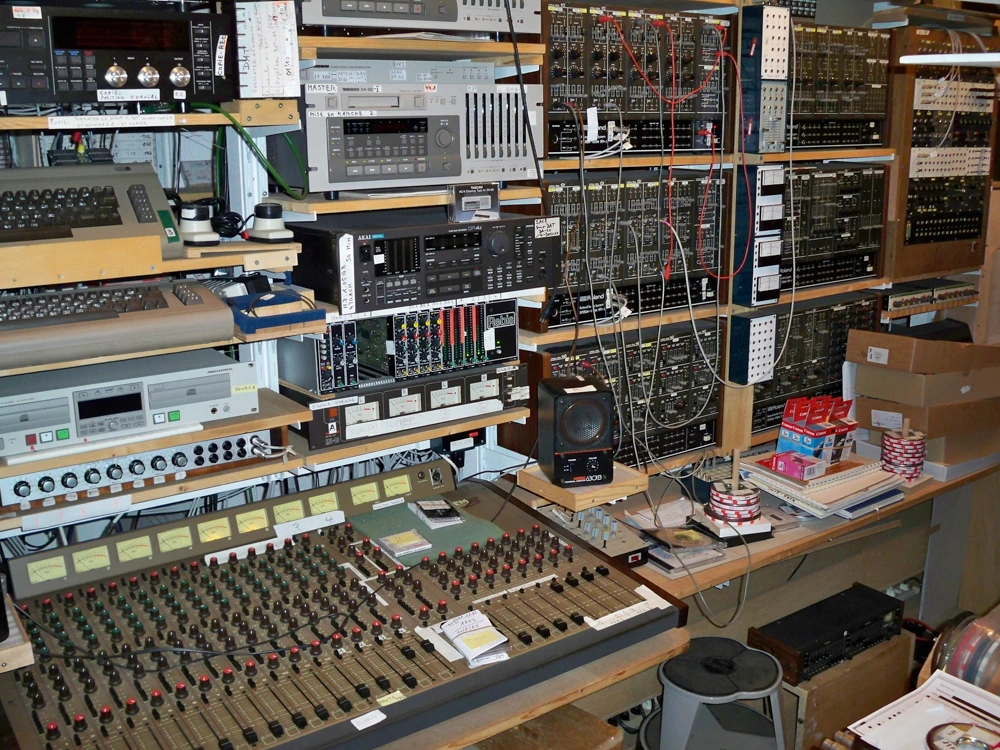
Oscar and Janine’s forged scores are of great interest to us. Oscar’s sculptures are paired with multi-voice electronic music files, recorded separately on multiple tracks, which allows for the spatialisation of sound. This involves the use of space, steel as a material, and sound as a material.
Daniel Zea and Aurélien Ferrette immersed themselves in the multiple versions found on various media, and we were able to locate and listen to some very interesting sound files. These works contain many moments of silence, and our idea is to engage in a dialogue with the work during these moments of silence.
This work also enabled us to catalogue a small portion of these recordings
Making steel plates ring:
We gathered a series of plates (around twenty) of various sizes and thicknesses. Most of these plates were found outside the studio; they are not sculptures, they have been cut, sometimes slightly forged, but they are raw material.
Using transducers (small, bare loudspeakers) attached to these plates, we played various frequencies, or sounds created by Oscar, and realised that the resonances of these plates form a sort of small orchestra. The plates become a kind of loudspeaker or vibrating instrument. We are extremely interested in this avenue for the future of our work.
A Wiggliesque organ
We found videos on hard drives showing Oscar Wiggli building an organ. This organ is in the workshop upstairs. The organ built by Oscar does not replicate our traditional scale. He collected an incredible number of organ pipes of all sizes and made from various materials, which he transformed and adjusted to create very distinctive sound combinations. We have transcribed several combinations, as indicated by Oscar, and then we explored the acoustic potential of this utterly fascinating little instrument, which it would be very interesting to be able to play in concert.
Furthermore
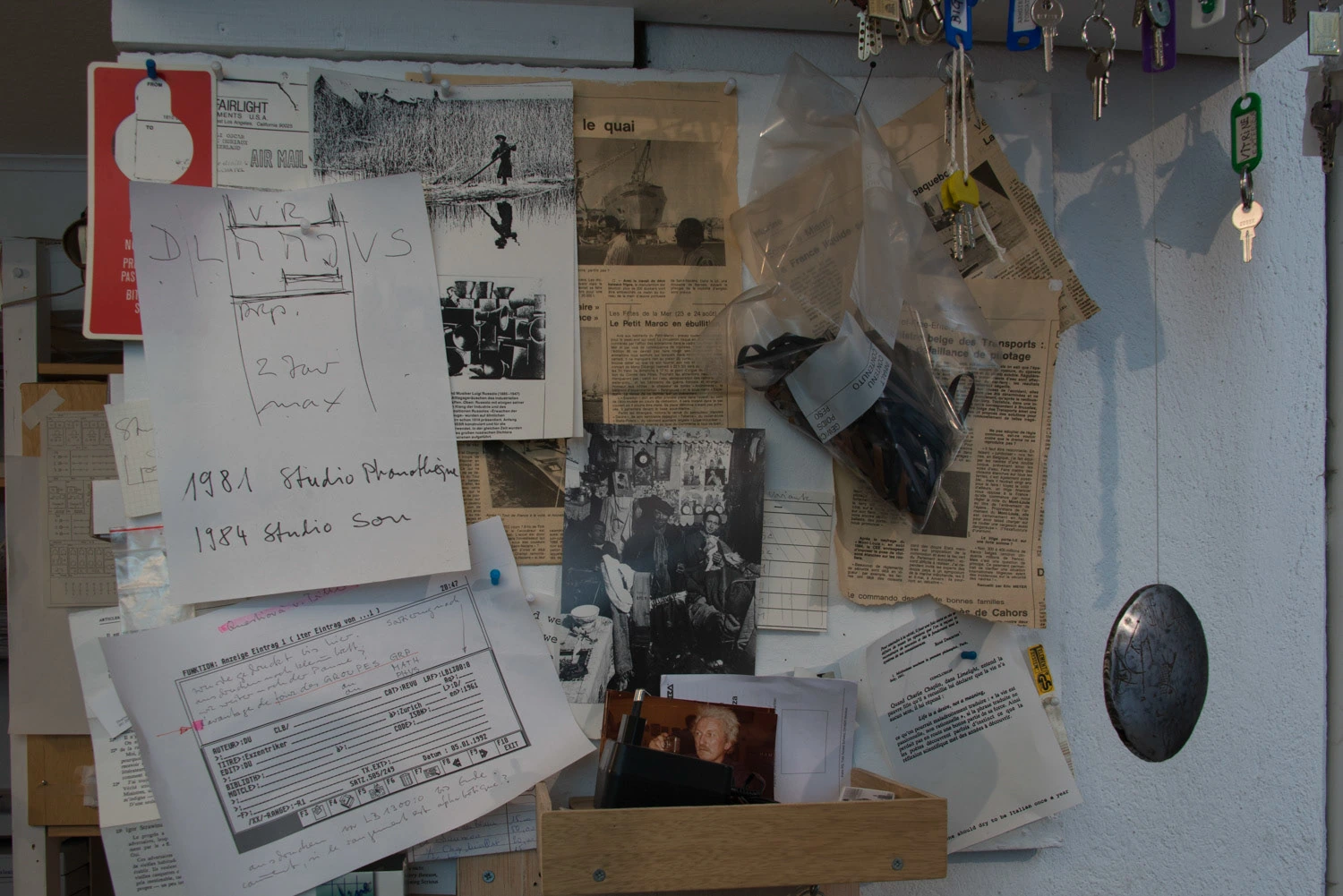
Oscar recorded collections of sounds he created using a multitude of objects: snail shells in a cast-iron bowl, mobile-like structures made of seeds, metal discs, chains, flower pots, etc. We recorded several improvisational sessions using these materials, which could be incorporated into a composition.
We are delighted with this second residency and would like to thank the foundation and Daniel Gaemperle for enabling us to carry out this research, which will form the basis for our collective composition, rooted in the world of the Wiggli—a very good start towards realising our concerts in August 2025.
We are fully aware of the privilege we have in being able to work so closely with this life’s work!
Anne Gillot on behalf of the Vortex ensemble